Category: Wildlife

Ready for a walk ?

Ready for a walk ?

Ready For a Walk ?

No Doubt about it, spring is in the air.

May 29th Nesting material IMGP2022
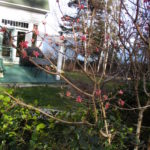
Nesting material – last years debris-BH

If warmer days and fragrant blooms aren’t enough of a sign, other sights, such as a Robin gathering garden chafe to weave her nest or a bee buzzing around the blossoms, are living proof.

For more delightful clues, why not join me on this three part tour of May in our own gardens, Natures garden and in a special NS Public Garden.

Click on any picture for a slide show.

Part One – In our gardens:

Part two – In natures garden : coming soon

Spring Notes

Spring Notes

We are waking each morning to song sparrows singing and we look out on Crocus, Daffodil, Daphne and other bloomers, a reminder in spite of the cool temperatures that spring is here. There are many spring birds in our yards already and more arriving each day.

As I rake, weed, divide & pot for the upcoming annual gardeners sale at the Chester Train Station May 28th I avoid clearing the rudbeckia and echinacea seed heads. The finches are pleased to have the seeds and I can pot up the volunteer seedlings that sprout.

3 March 13th   IMGP1148

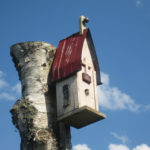
After carefully cleaning out the next boxes and repairing any damage we  gave them and all the feeders good wash with a mild dish soap and a rinse with 1 part bleach to 9 parts water followed by a clear rinse.

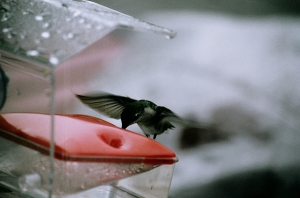
The hummingbirds usually arrive here on or about May 8th.

Oct 5th  2013 005
Ruby-throated hummingbird

  Hummingbird feeders should be washed well each time the nectar is refilled. ¼ cup of sugar per 1 cup of water … no food color).  If small quantities of sugar water are mixed every day or two, there’s no need to boil the water. But, if mixed in larger batches and refrigerated, then it’s wise to make the mixture with boiling water.

For those who are interested in wildlife friendly gardens, especially gardening to attract birds the web site : https://www.allaboutbirds.org provides many helpful suggestions.

A Look at an Autumn Garden

A Look at an Autumn Garden

Goldenrod As Chester gardeners greet the second week of September, they are keeping a weather eye out for a possible hurricane but, to date, the community has experienced only a warm south wind and heavy showers. Many of our favourite perennials, having outlived their terms, have vanished from local gardens but a number of hardy wildflowers, like goldenrod in its many varieties, are adding splashes of colour to the landscape.

A cloud of native asters (volunteers) brighten the edge of a more formal bed, where the sword-like leaves of gladioli stand stiffly as if defending the plot from additional invaders.

Asters
One perennial that is welcome at this time of year is the Sedum ‘Autumn Joy’, with its gradual colouration that develops from pale pink to deep rose over the next few weeks.  


Not so welcome is the change seen on some perennials and shrubs after a nocturnal visit by the ever-roaming white-tail deer.  In one garden this year, they have pruned several rose bushes, three yews, a stand of hollyhocks and a young Weigela bush, a section of which is seen in the photo below. After suffering from deer brouse in the spring, this shrub has again been assaulted this summer when another ten healthy growing shoots were recently nipped off. Sometimes we doubt it will ever grow tall.


And, despite best efforts to provide a barrier composed of a fishing line and netting, we were unable to prevent deer from reaching into a rose bed where they sampled the tender shoots of a rose named for our favourite composer – Mozart. The stark ends of several stalks show the sad result of losing yet more buds and blossoms.

Still, in every garden there are always compensations, like a rambunctious clump of bright pink superbells, spilling over a rockery wall…


…Or the surprise of finding a newly opened day lily (Sweet Child), still damp from a recent rainfall, long after we’d thought all the blooms were finished for this year.

Now that the peaches have been harvested, sampled and turned into jams and chutneys, we can turn out attention to the apple crop. The apples on this tree are a variety called “July Red” ( which is curious since they ripen in September).  An earlier variety, the NovaMac, with its crisp tart taste, is a favourite in this area. It was  especially developed as a Nova Scotian hybrid of the standard Mackintosh. 

"July Red" apples
To close this post we add another photo of a Monarch butterfly, supping from the tiny blossoms of a Buddleia bush. This is by way of a reminder that the next meeting of the Chester Garden Club – September 17 – will feature a presentation on these marvellous and somewhat mysterious creatures.

Monarch butterfly on Buddleia

Images from a Summer Garden

Images from a Summer Garden

Having enjoyed one of the sunniest
and warmest summers on record in our
area, I felt it time to look back over
some of the pleasures to be found in and around our Chester gardens.


Perennial sweet peas are a delightful surprise every spring when they appear at the foot of a wrought-iron fence and soon send out massive tendrils and blooms that create a privacy hedge.  The yellow flowers above belong to a tall artichoke plant (a volunteer that sprang up under a cluster of lilacs). Seasoned gardeners may also spy a young goldenrod peeking out from the background.

Wisteria drapes gracefully over a pergola, providing a shady nook on a hot day.

A pale pink rose whose I.D.  tag was lost almost as soon as it was planted in June (sigh…) has produced innumerable blossoms now that it is encased in a net cage designed to foil the deer who had dined on the bush a few nights after I had planted it.  (Perhaps one of the deer also ingested the tag!) 

Of course, deer weren’t the only wildlife to appear in our gardens.  We’re home to raccoons, pheasants and foxes, as well as birds and bees. The bee below is finding nectar and pollen in a rose blossom  – the fragrant Blanc double de Coubert. 

In early summer, gardeners and tennis players alike were supervised daily by a pair of hummingbirds who liked to perch high on a weathervane where they could survey the action in all directions.  Although they drank from strategically placed feeders, they also had access to honeysuckle vines and many other natural sources.

The standard bird feeder was a busy meeting place for chickadees, goldfinches, song-sparrows and purple finches.  Larger birds,  like mourning doves, pheasants and crows, hung around the base of the stand picking up fallen seeds.   


A future project includes learning to shoot with a video camera so that I can capture scenes like the dance of the Monarch butterflies that were busy quenching their thirst on a Buddleia in full bloom.


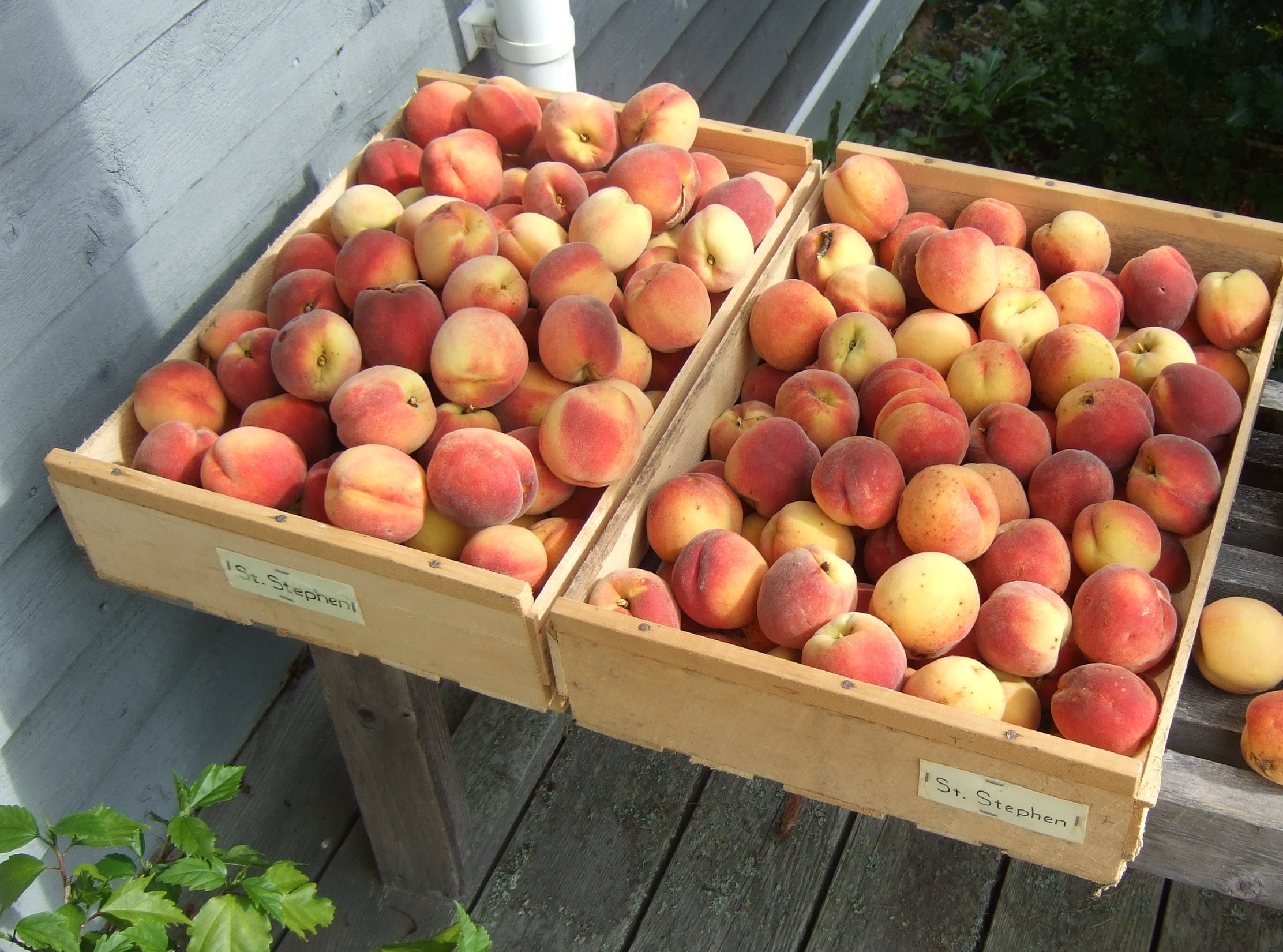
As perennials die back, the old reliables –  annuals, such as nasturtiums and petunias  – continue to flaunt their bright colours.  But, as this newly harvested crop of peaches attests, summer is slowly but surely drawing to a close. 

newly harvested ripe peaches

summer sunset
On a positive note, the approach of autumn means the start-up of classes, clubs and workshops designed to energize us all during the cooler months ahead.  By coincidence, having recently enjoyed the presence of a large group of  beautiful “Monarchs” in our garden, we have just been advised that the first fall meeting of the Chester Garden Club will feature Roberta MacDonald,  who will give an illustrated presentation on  Monarch butterflies.  The  meeting is scheduled for September 17, 6:30 for 7:00 PM at St. Stephen’s Parish Community Centre. 

A Birds-Eye View

A Birds-Eye View

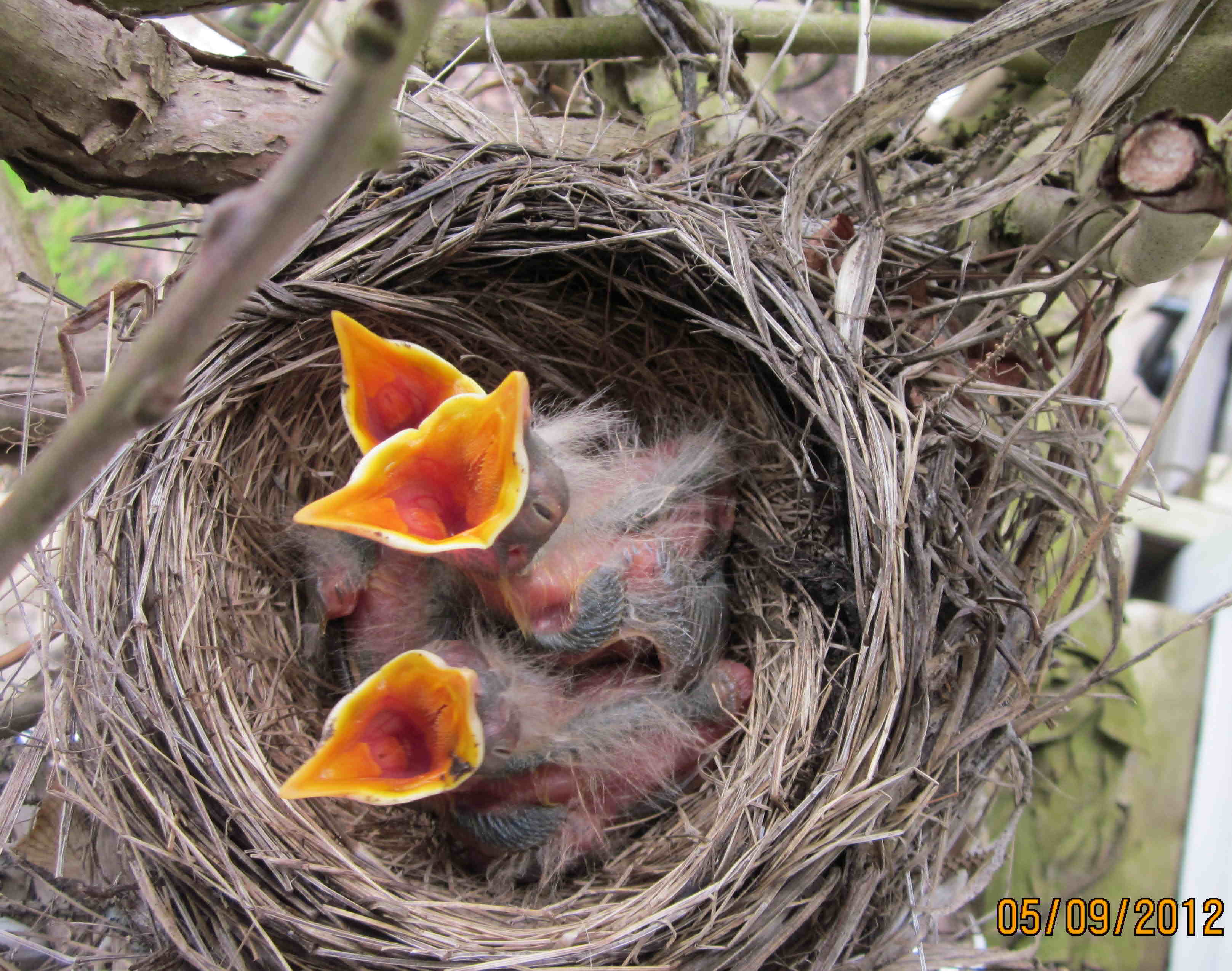
Ever wonder what a mother robin sees as she looks down into her nest once the eggs have hatched?  The four photos here might provide a glimpse of what awaits Mama and Papa  when they return with snacks for their young.   This pictorial record of baby robins, as they developed over a period of four days this month, was sent to us by club member Marion, who played host to a robin family that nested in a Kiwi vine on her property. The nest was spotted only during the process of pruning back the vine. Needless to say, that work is now on hold until the babies fledge. 
 
newly hatched baby robins

The first photo shows tiny fragile creatures not long out of their robins-egg blue shells and huddled together for warmth. The robin parents appear to be very tidy nest-keepers (where is the evidence of discarded shells?) 

soft down appers on newly hatched robins

The photo above, taken three days later, shows the babies beginning to develop a soft but sparse downy covering.  The next photo, taken merely one day later, is evidence of the start of a thicker downy coat…

baby robins are growing fast

… and suddenly, four days after the first photo, in an “open wide” posture that any dentist would love,  we see three little beaks thrust up in hopes of receiving a juicy morsel of earthworm or whatever is on the daily menu. 

baby robin beaks open wide

The return of migrating birds each spring gives us a lift and we have been seeing lots of robins, several pairs of osprey and occasional goldfinches in the last few weeks. Some birds, however, have difficulty accommodating to human habitation despite years of traveling back to the same site.  One pair of robins with whom I’m quite familiar has made a standard practice over the past few years of savagely attacking their own reflections in windows of the house where I live.   By repeatedly hurtling their bodies at the glass, they leave an opaque smear on the window, which is disconcerting in itself but even more annoying is the steady thump … thump… thump that accompanies these feats of daring-do, beginning just after dawn and continuing at intervals throughout the day. I believe it is just one pair but the practice has been going on over a long time, so perhaps the trait has been passed to the next generation.  Does the phrase “bird brain” come to mind? Does anyone have a comment as to this behaviour?

Neighbourly Nature News

Neighbourly Nature News

Most people who spend a fair amount of time in their gardens soon develop an interest in the wider ecological footprint of their territory.  Over time, by observing the wildlife that thrives in their area, gardeners come to a greater understanding of the role these creatures play, and the need to preserve suitable habitat for the birds and many other critters with whom they share the land. 

To date, the Canadian Wildlife Federation has certified more than 650 backyards across Canada as “wildlife friendly,” meaning that they contain the food, water, shelter and space that wildlife needs to call a place home. Now,  the Village of Lawrencetown, a small community in the Annapolis Valley of Nova Scotia, has become the first community to earn such certification.  Thanks to the efforts of Diana Mullings Ackroyd, whose own property was certified in November 2009 and who then collected evidence of many other backyard habitats (30 per cent of the village’s residents) that met the CWF’s criteria, Laurencetown has been awarded CWF’s first certification as a Backyard Habitat Community.

The habitat program’s goal is to provide food, water, shelter, and space for wildlife.  Food can be as simple as fruit-bearing shrubs or  vines; flowering plants for pollinators; seed-bearing trees and shrubs; and seed-bearing perennials left through the winter. Shelter can be provided by trees, shrubs, piles of brush or logs, or even rock piles. Water can be as simple as a saucer of water or a bird bath, or as ambitious as a pond.  To read more about the Habitat program, check out the CWF website at cwf-fcf.org

In  other neighbourly news, Niki Jabbour’s extremelyhelpful book  on year-round vegetable gardening is now available in bookstores. Her tips on planning, designing and planting for year-round harvesting are the result of years of experimentation. The colourful illustrations add to the book’s appeal, and make it a must for the bookshelf of anyone interested in harvesting crops of fresh greens in mid-winter.  

The Year-Round Vegetable Gardener herself

The book is published by Storey Publishing and the photographs are by Joseph de Sciose.

Next week, another neighbour, Logie Cassells , will be the guest speaker at the Chester Garden Club’s first general meeting of the year when he will make a presentation on Haskap berries, their cultivation and their use. The berries are grown locally and Logie states that  they contain high levels of antioxidants and vitamin C.  Demand for the tasty berries is growing as they can be turned into juice, jellies and liqueurs. This is a presentation not to be missed. All members are encouraged to come along, for 7 pm at St. Stephen’s Parish Community Centre on Monday, February 20th.